Let's Talk About Good Posture
If you've ever been in the military or participated in a march past, you know there's a particular way you're expected to stand. Anyone who attended the three-week NYSC orientation camp and got involved in the drills will remember how soldiers instructed you to stand tall, chest out, shoulders back, chin up. You had to maintain that specific posture. It wasn't just about looking sharp; it was about discipline and alignment.
Just as these military activities demand a particular posture, the same applies to our everyday lives. When it comes to how we carry ourselves daily, especially as DSE users and remote workers, there is bad posture and there is good posture. The difference between the two can significantly impact your health, productivity, and overall wellbeing.
What is Good Posture?
Good posture is the proper alignment of your body parts supported by the right amount of muscle tension against gravity. Whether you're sitting, standing, or lying down, good posture ensures that your muscles, joints, and ligaments work efficiently with minimal strain.
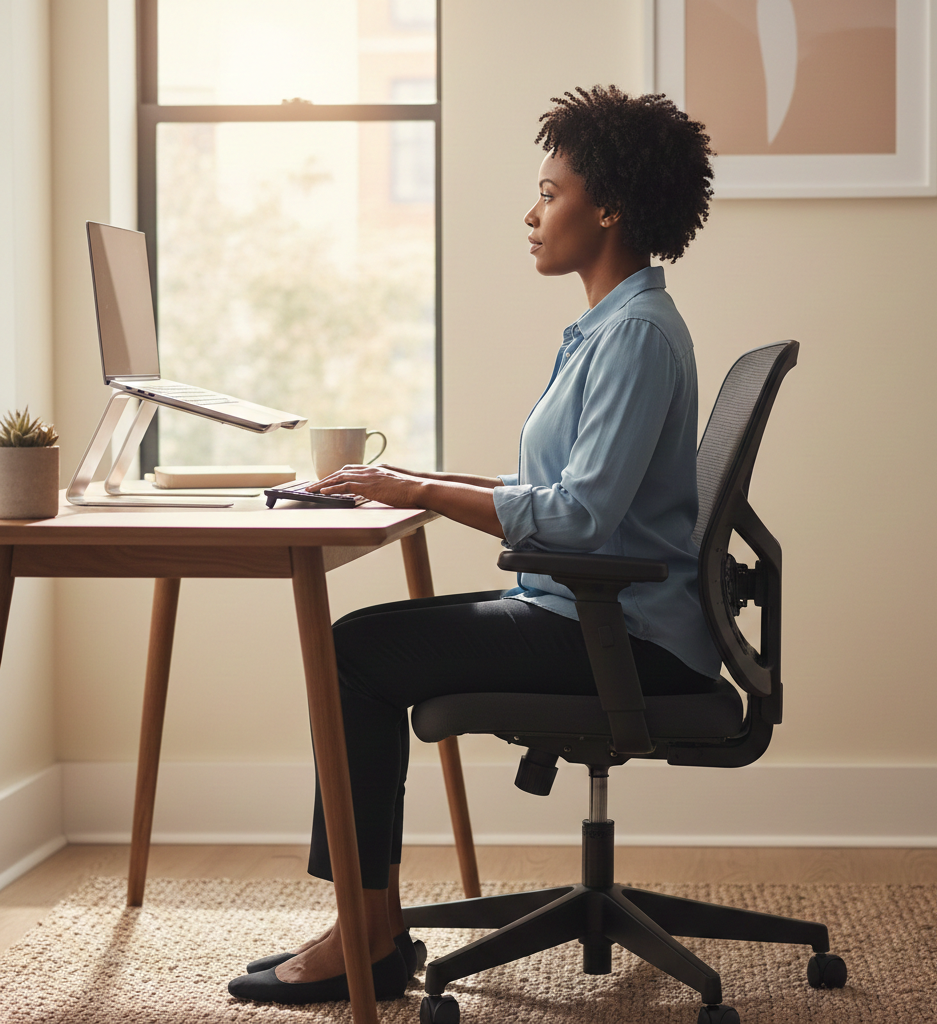
For desk workers and remote professionals, good sitting posture means your spine maintains its natural curves: a slight inward curve at the neck, an outward curve at the upper back, and an inward curve at the lower back. Your ears should align with your shoulders, and your shoulders should align with your hips.
Benefits of Good Posture
Maintaining proper posture offers numerous advantages, particularly for those spending long hours at their desks:
Reduced pain and discomfort: Good posture minimizes strain on your muscles, ligaments, and joints, significantly reducing back, neck, and shoulder pain that many remote workers experience.
Increased energy levels: When your body is properly aligned, your muscles work more efficiently, requiring less energy to maintain positions. This means less fatigue throughout your workday.
Improved breathing and circulation: Proper alignment allows your lungs to expand fully, improving oxygen intake. Better circulation means more oxygen reaches your brain, enhancing focus and concentration.

Consequences of Poor Posture
On the flip side, poor posture can lead to several health complications that affect both your work and personal life:
Chronic pain: Slouching or hunching over your computer can cause persistent back, neck, and shoulder pain that worsens over time.
Headaches and migraines: Forward head posture puts extra strain on your neck muscles, often leading to tension headaches.
Reduced lung capacity: Slumping compresses your chest cavity, limiting how much air your lungs can take in with each breath.
Musculoskeletal Health Complications: Poor posture creates a domino effect throughout your musculoskeletal system. When you consistently maintain improper alignment, certain muscle groups become overworked while others weaken from underuse. This muscle imbalance can lead to conditions like upper crossed syndrome, where your chest muscles become tight and your upper back muscles weaken, creating that characteristic rounded shoulder appearance. Over time, poor posture can also contribute to disc problems, as uneven pressure on your spinal discs can cause them to compress or bulge. Your tendons and ligaments adapt to the positions you hold most frequently, so prolonged poor posture can actually shorten these tissues, making it physically harder to achieve proper alignment even when you try. This is why early intervention and correction are so important for your long-term musculoskeletal health.
Joint wear and tear: Misalignment accelerates the wear on joint surfaces, potentially leading to arthritis and other degenerative conditions.
How to Maintain Good Posture as a DSE User
Now that we understand what good posture is and why it matters, here are practical ways to maintain it while working:
Optimize your workstation:
Set up your desk so your monitor is at eye level, about an arm's length away. Your keyboard and mouse should be positioned so your elbows rest at a 90-degree angle. Ensure your feet rest flat on the floor or on a footrest, with your knees at hip level or slightly lower.
Invest in proper seating:
Use a chair that supports your lower back's natural curve. Adjust the height so your thighs are parallel to the floor. If your chair doesn't provide adequate lumbar support, consider using a small cushion or rolled towel.

Practice the 90-90-90 rule:
Your elbows, hips, and knees should all be at approximately 90-degree angles when sitting. This position promotes proper alignment and reduces strain.
Strengthen your core:
Your core muscles support your spine and help maintain good posture. Incorporate exercises like planks, bridges, and bird dogs into your routine several times a week.
Be mindful of your phone use:
When using your smartphone, bring it up to eye level instead of dropping your head down. This simple change can prevent text neck and associated pain.
Stay active outside work hours:
Regular physical activity strengthens the muscles that support good posture. These activities can make a significant difference.
Just as soldiers maintain their stance during march past, you too can maintain good posture throughout your workday. It requires conscious effort at first, but with practice, proper alignment becomes second nature.
Remember, good posture isn't about being rigid or uncomfortable. It's about finding alignment that allows your body to function optimally. Start implementing these tips today, and notice the difference in how you feel both during and after work.
Your posture is an investment in your long-term health. Make it a good one.


Comments