Ergonomic Choices Every Remote Worker Makes
- Dec 19, 2025
- 3 min read
Ask anyone who loves remote work and they will tell you about the freedom it brings. Just yesterday, I read a post where a lady explained how she had to get a certain device to make her work faster and easier. Did it make sense? Absolutely. In fact, it made perfect sense. Small choices like that add up and make work feel lighter in the long run.
In everyday life, we make choices all the time. What to eat. What to wear. Where to sit. What many people do not realise is that these decisions also include ergonomic choices. Even when you are not thinking about ergonomics at all, you are still making them. How you sit. Where your screen stays. How long you remain in one position. These are all choices, even if they do not feel important at the moment.
Have You Heard the Term “Couch Potato”?
You may have heard the term couch potato before. It is often used to describe someone who spends long periods sitting or lying down with very little movement. In simple terms, it refers to a body that stays inactive for too long.
Traditionally, this label was linked to people who avoided work or physical activity. There is now a group of people who do not fit that old description, yet still sit for long hours. These are what I like to call active couch potatoes. An active couch potato works. They think, plan, attend meetings, and type for hours. The mind is active, but the body stays in one position for most of the day. Work is happening, but movement is limited. This is where ergonomic choices come in.
Working for long hours from the couch, bed, or an unsupportive chair may feel convenient, but over time, it places extra strain on the neck, back, shoulders, and hips. For active couch potatoes, small ergonomic adjustments can make a noticeable difference. Supportive seating, better screen height, and regular movement breaks help the body cope better with long work hours. Let us take them one after the other.

The Choice of Where and How You Sit
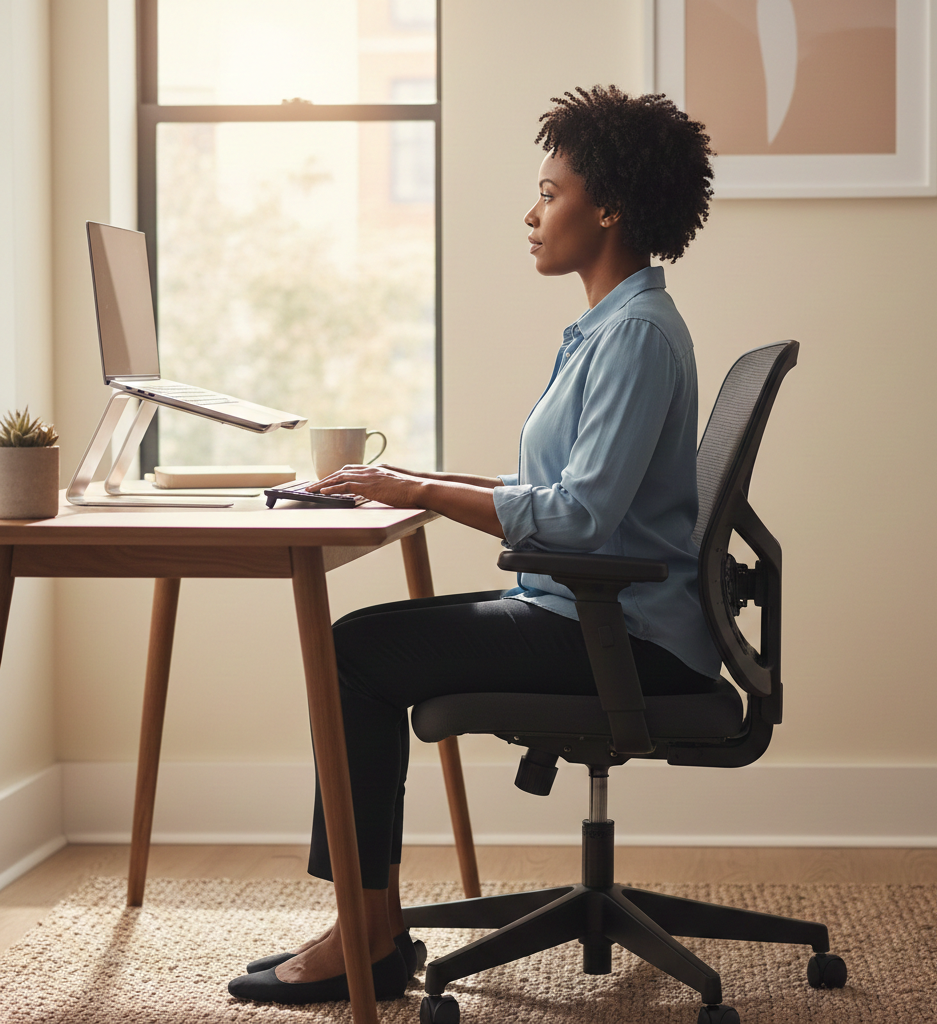
Many of us simply sit wherever feels convenient. Comfort matters, but support matters just as much. A good ergonomic sitting choice allows your feet to rest on the floor, your hips to feel stable, and your lower back to relax. When you sit too low, too high, or without back support, the spine and hips start doing extra work. The body may manage for a while, but fatigue slowly builds up.
Desk Height
Desk height decides what your shoulders experience all day. You have probably heard of people changing their beds because of discomfort. Your work setup is no different.
An ergonomic choice here means allowing your forearms to rest comfortably while your shoulders stay relaxed. When your desk is too high or too low, tension settles into the upper back and neck.

Screen Placement
It is interesting how screens control head posture. A screen that sits too low encourages the head to tilt forward repeatedly, often without you noticing.
An ergonomic screen choice keeps the screen close to eye level and at a distance that feels natural. This reduces strain on the neck, especially during long work sessions.
Keyboard and Mouse Position
Some people are keyboard soldiers. Their hands are constantly at work. When the keyboard sits too far away, the shoulders reach forward. When the wrists bend awkwardly, tension travels up the arms.
Keeping the keyboard close and the mouse within easy reach allows the shoulders to relax and the wrists to stay neutral.
Movement as a Daily Decision
Movement is part of work. Those small movements throughout the day help prevent stiffness and fatigue from building up. Standing briefly, changing positions, or walking around between tasks all count. Remote work gives flexibility, and your body deserves to benefit from that too.
In conclusion, remember that the body also responds to mental stress the same way it responds to physical strain. Ergonomic choices are about creating conditions that help the body cope through long hours. Sometimes, the most helpful choice is simply adjusting your position and continuing with a little more ease.


Comments