Ergonomic Gifts You Can Get Yourself as a Remote Worker
- Dec 26, 2025
- 3 min read
Today, I want to give you a different kind of present. Not something wrapped in paper, but information about ergonomic tools you can get yourself to improve how you work and how your body feels while doing it. Neck stiffness, shoulder tension, wrist discomfort, or lower back pain are some of the most common musculoskeletal complaints seen in people who use screens daily, and they often have less to do with workload and more to do with how the body is supported during work.
Ergonomic tools are simply tools that reduce strain on the body. They help you sit, reach, and view your screen in ways that place less stress on muscles and joints. From a physiotherapy perspective, they support better posture, encourage movement, and reduce the risk of work-related musculoskeletal disorders.

A Supportive Chair or Lumbar Support
Sitting without proper support places continuous demand on the muscles of the lower back. Over time, this can lead to fatigue, stiffness, and pain. A chair that supports the natural curve of the spine helps distribute body weight more evenly and reduces stress on the lumbar region.
If a full ergonomic chair is not available, a lumbar cushion or firm pillow placed behind the lower back can still provide meaningful support. This small adjustment helps maintain a more neutral sitting posture and reduces the tendency to slump during long work hours.

A Laptop Stand to Reduce Neck Strain
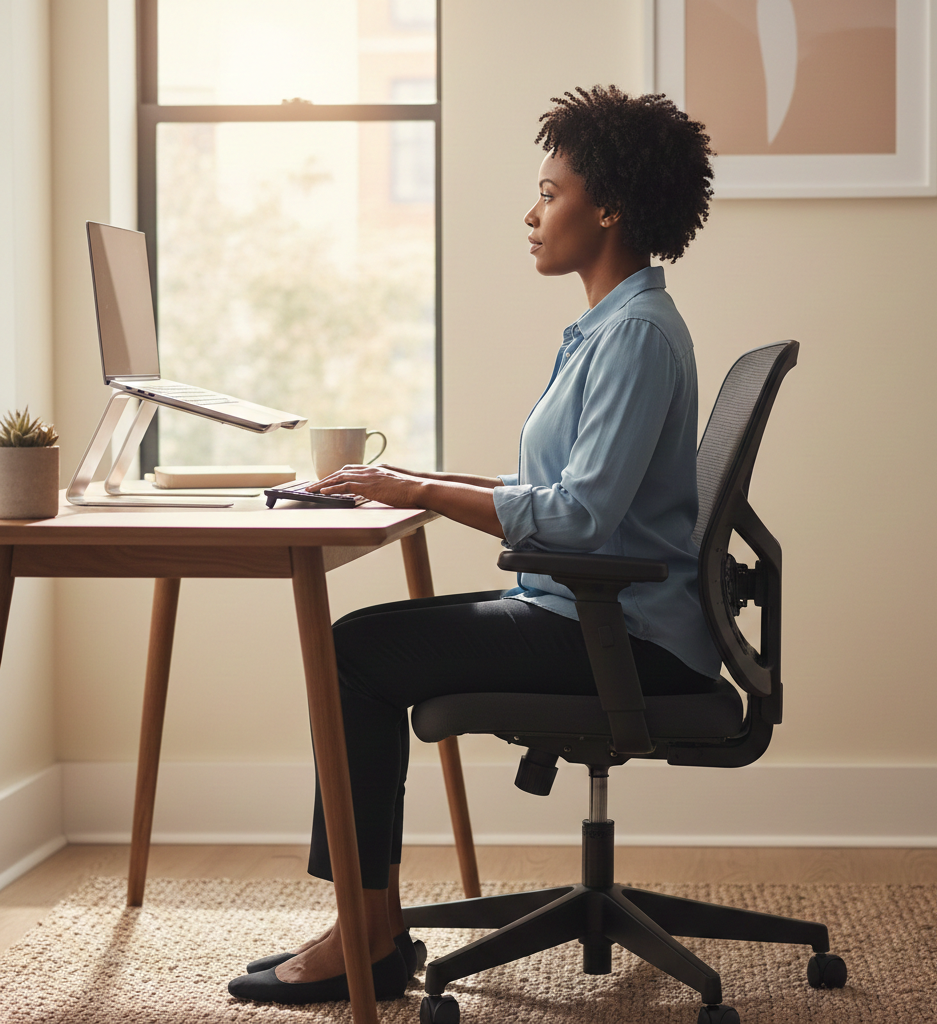
Laptop screens are usually positioned too low, which encourages the head to tilt forward. This position increases the load on the neck and upper back muscles and is a common contributor to neck pain among DSE users and remote workers. Using a laptop stand to raise the screen closer to eye level helps keep the neck in a more neutral position. When combined with an external keyboard and mouse, this setup significantly reduces strain on the neck, shoulders, and upper back.
External Keyboard and Mouse for Arm and Wrist Comfort
Typing directly on a laptop often forces the shoulders to lift and the wrists to bend awkwardly. Over time, this can contribute to wrist pain, forearm strain, and shoulder discomfort.
An external keyboard and mouse allow the arms to rest comfortably by the sides and keep the wrists in a more neutral alignment. This setup reduces repetitive strain and supports healthier upper limb posture throughout the workday.
Foot Support for Better Sitting Alignment
When your feet do not rest properly on the floor, posture tends to shift. Some people perch forward, tuck their feet under the chair, or sit unevenly, all of which increase strain on the lower back and hips.
A footrest or stable support under the feet helps maintain alignment between the hips, knees, and ankles. This improves sitting comfort and reduces unnecessary tension in the lower body during prolonged sitting.

Tools That Encourage Regular Movement
Even with good posture, staying in one position for too long places stress on muscles and joints. Movement is a key principle in physiotherapy and one of the most effective ways to prevent musculoskeletal discomfort.
Simple tools such as timers or reminder apps encourage regular position changes, stretching, or short walks. These movement breaks improve circulation, reduce muscle fatigue, and support joint health, especially for remote workers who spend most of their day seated.
Lighting and Screen Comfort
Poor lighting often leads to leaning forward or straining the neck and eyes. For example, when your phone brightness is very low, you might find yourself squinting or leaning forward without noticing it. Over time, this can create neck and shoulder tension. Adequate lighting and proper screen brightness help maintain a relaxed posture and reduce eye strain, which can indirectly reduce neck and shoulder tension.
Adjusting your work environment in this way supports both visual comfort and musculoskeletal health.
By the time the year winds down, your body has carried you through countless hours of work, challenges, and small victories. Giving yourself the tools to sit more comfortably, and support your posture is kindness, and practical care. Please, take a moment to notice how your body feels, make small adjustments, and appreciate the effort it has put in for you all year.


Comments