Kyphosis — The Curved Back Posture Explained
- Dec 7, 2025
- 3 min read
Kyphosis, often described as a rounded upper back, is becoming more common, especially among people who spend long hours working on their laptops and other screens. Most times, it doesn’t start as a big problem. It begins with small posture habits during long work hours, and over time, those habits start to affect one’s overall comfort day to day.
What Is Kyphosis?
Kyphosis is a condition where the upper part of the spine curves forward more than it should. Normally, the thoracic spine has a gentle curve, usually between 20 and 45 degrees. Once this curve goes beyond what is healthy, often passing 50 degrees, the back starts to look noticeably rounded.
For people who work long hours in front of screens, this change happens gradually. Leaning forward toward your laptop every day slowly trains your body to accept that posture as normal. And while it may look like just a posture issue on the surface, it actually affects the way your whole body carries itself. Over time, this creates extra strain on your muscles and joints, which often leads to persistent discomfort.
Recognizing the Symptoms
The symptoms of kyphosis don’t usually show up as ‘surprise surprise’. They build up slowly, which is why many people don’t immediately link their aches and stiffness to their posture. The most noticeable sign is a rounded upper back, but there are other things the body begins to show.
Some people feel tired more easily because their muscles are constantly working harder than they should. Breathing may start to feel shallow, as the position of the rib cage makes it harder for the lungs to fully expand. As things progress, neck tension can lead to frequent headaches, and in more serious cases, some people experience numbness or weakness in their legs when the spine begins to affect nearby nerves.
Why Remote Workers Are More Prone to It
Most remote workers develop what is called postural kyphosis. This type is not caused by bone defects, but by repeated daily habits. Sitting bent forward for hours at a time slowly trains your body to treat that position as its default.
Over time, the muscles across the chest tighten and shorten, while the muscles of the upper back weaken and stretch out. Gradually, your spine begins to adapt to the shape you place it in the most.
Poor workstation setup makes things worse. Long hours of uninterrupted sitting also add to the strain. As people get older, the discs in the spine lose their natural height, and in some cases, tiny compression fractures can occur, especially in people with osteoporosis. Teenagers going through growth spurts may develop a more rigid form called Scheuermann’s kyphosis. Older adults, particularly women with weaker bones, are also more vulnerable. But more than ever, young and middle-aged remote workers are developing postural kyphosis simply because of daily work routines.
How Kyphosis Progresses Over Time
Kyphosis tends to move through stages when it isn’t addressed early. In the beginning, the curve is usually mild and flexible, meaning you can still straighten your back when you become aware of it. This is the easiest stage to correct.

With time, the curve becomes more noticeable and harder to change. The muscles begin to resist straightening because they have adapted to the rounded position.

In more advanced stages, the curve can become fixed and may require medical care. At that point, exercises alone may not be enough to fully restore natural alignment.

How to Protect Your Posture
The encouraging part is that postural kyphosis can often be prevented with simple, consistent habits. As the saying goes, prevention is better than cure.
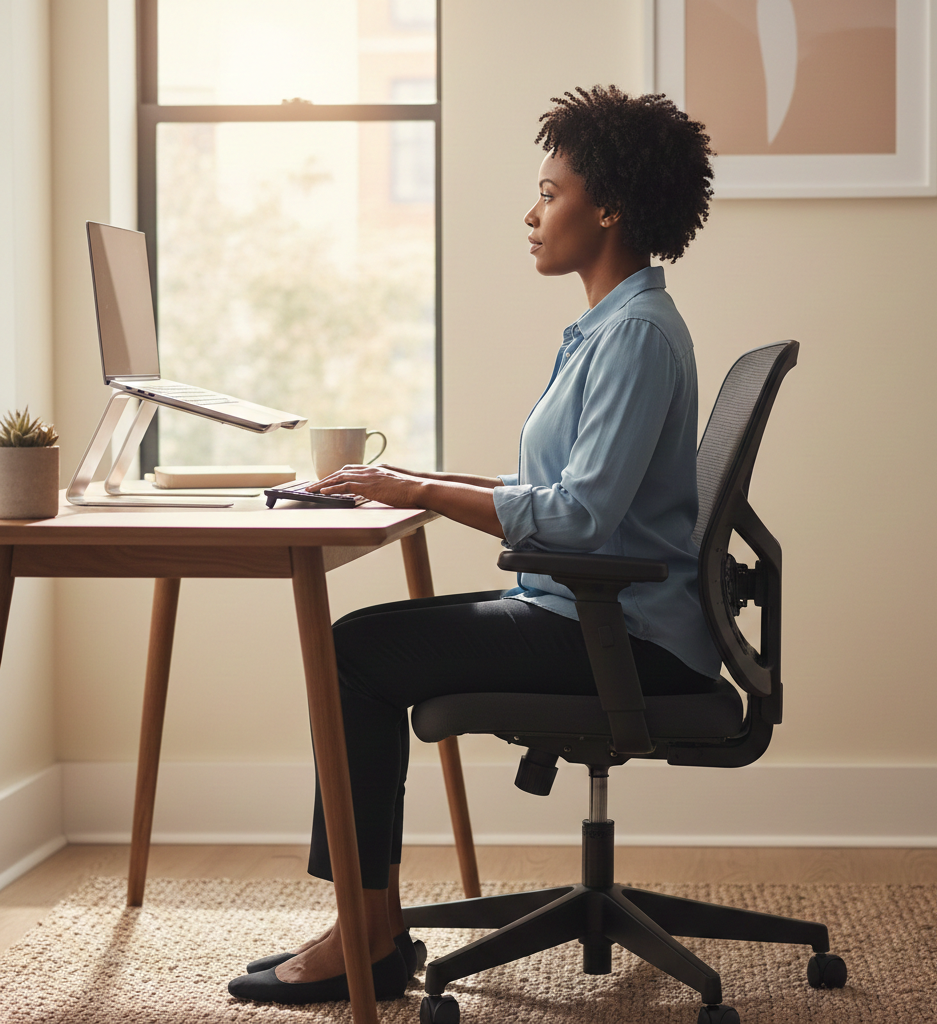
Keeping your monitor at eye level reduces the urge to tilt your head downward. Standing up and moving around every 30 to 45 minutes helps stop your body from settling into poor patterns.
Exercises that build strength in your upper back and shoulder blade area help balance out the pull from tight chest muscles. Stretching your chest and hip flexors also plays an important role. When your core is strong, your spine gets the support it needs to stay upright during long work sessions.
Kyphosis may sound like something that happens much later in life, but your posture today plays a big role in what your body feels like tomorrow. Every hour you spend at your screen is either supporting your spine or slowly reshaping it. For remote workers and DSE users, paying attention early is not just helpful, it is necessary for long-term comfort and well-being.


Comments