Stop Pushing Through Pain
- Aug 28, 2025
- 5 min read
Most display screen equipment (DSE) users have subtle fears about their workspace that they are sometimes unaware of or silently dismiss. I'm here to address that because just like cancer, it can rapidly impact your body to the point that "e fit dey carry your body go where you no know." As remote and office workers, we sometimes neglect our ergonomic comfort and fail to embrace ergonomic fixes.
Sadly, the only reward for this is pain and musculoskeletal disorders. Initially, your chair or desk may feel manageable, but as you progress, you'll find yourself adjusting your posture regularly and cracking your neck and back. But as time passes, the slight discomfort turns into musculoskeletal pain. And still, you won't change anything about your workstation setup.

Deep down, you know an ergonomic chair, an adjustable desk, and simple modifications to your workstation would help. So why don't you make the switch? This is the psychology of comfort. It's not just about chairs, desks or screens. It's about our habits, emotions, upbringing, and even our fears. And if you've ever hesitated to make an ergonomic change, even while in pain, stay with me. This is for you.
What Are Ergonomic Changes?
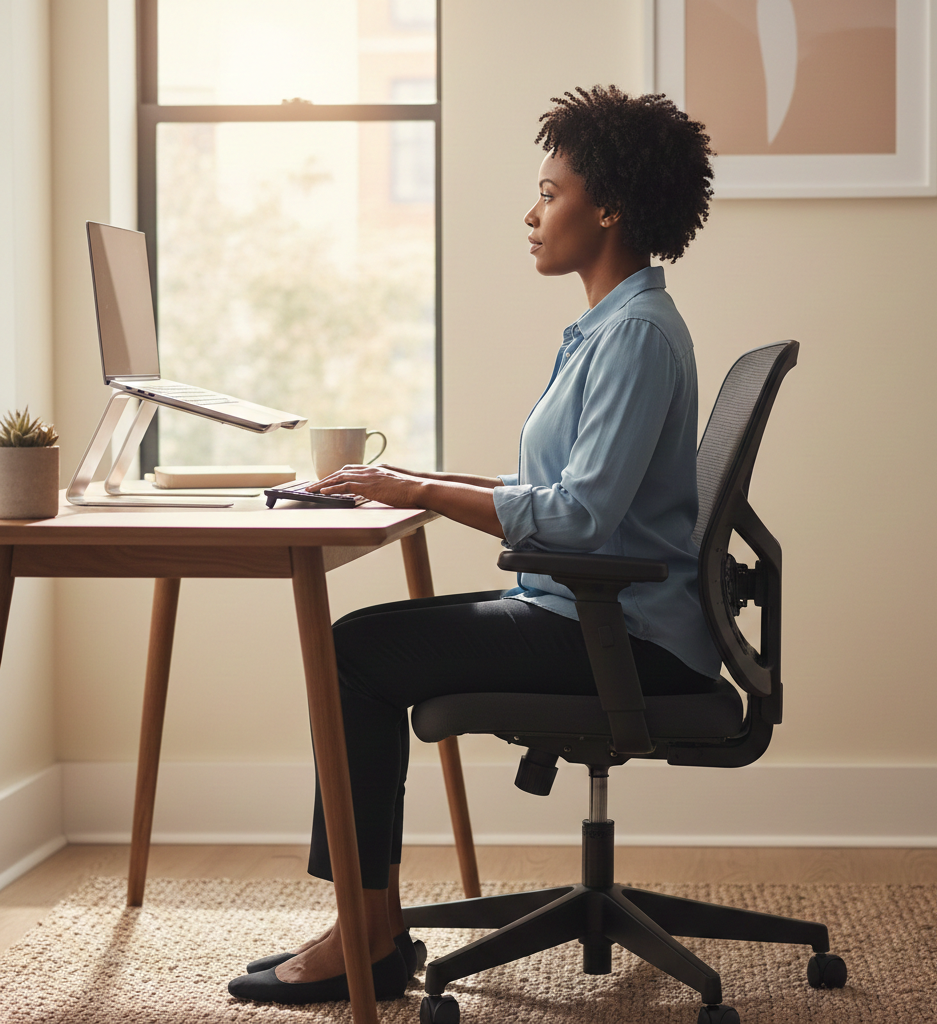
Let's start by breaking it down. Ergonomics is simply the science of fitting your work environment to your body. It's how your chair supports your back, how your screen sits at eye level, and how your keyboard aligns with your arms. It's about creating a workspace setup that supports you, not one that slowly wears you down.
So, when we talk about ergonomic changes, we mean minor adjustments like: elevating your screen so you stop assuming a forward head position, using an ergonomic chair that supports your lower back, positioning your keyboard so your wrists aren't strained, switching to a mouse that doesn't stress your finger joints and muscles, and taking more breaks instead of powering through.
These are simple changes that can impact many aspects of our health. But the elusive question remains, "Why Do We Stay In Pain?"
Why Do You Push Through Musculoskeletal Pain When Using DSE?
Taking breaks between work makes me look weak
It's just a temporay discomfort that will subside
I feel it's normal to feel pain when using DSE
Why Do We Push Through Musculoskeletal Pain?
1. Lack of knowledge about how a poor ergonomic setup can affect our health
Many people genuinely don't know how much their workspace can affect their body. If you've never heard of musculoskeletal pain, you might not realise that your wrist aches or neck stiffness is coming from the posture you maintain while working. You will think it's normal when, in a real sense, it's not. Over time, musculoskeletal pain from poor posture or bad workstation setup can result in irreversible damage to your muscles, tendons and nerves, leading to disability.
Also, because of the complexity of our body framework, other structures and organs can be affected as our body systems are interconnected and reliant on one another. Your whole body suffers when you push through musculoskeletal pain daily. Over time, it leads to exhaustion, irritability, and a drop in productivity.

Imagine not being able to walk properly, or climb the stairs or even pick something from the top of a shelf because you have a bad back. That doesn't sound too good. But knowledge is power. Therefore, knowing these things and applying them will empower you in your journey as a DSE user.
2. Cultural mindset and what pain means to you
Just like me, you were most likely raised to be strong and push through whatever pain you have. So even when your wrist is aching or your back feels like it will break any moment from now, you say nothing, because you've been taught to smile through it and show up, no matter what.
You know you're uncomfortable, but you convince yourself by saying it's not that bad. Or you may adjust when you get a new place. You then develop a coping mechanism called cognitive dissonance. It's the internal tension that arises when your beliefs (that health matters) don't align with your actions (working through pain). So, to reduce that mental tension, you make excuses.

You keep working. And every day, your body carries and 'endures' the burden of your silence, until it can no longer do that. And this is where the danger lies. Musculoskeletal pain doesn't go away just because you ignore it. A 2023 study found that people who push through physical discomfort at work often end up putting more strain on their necks and backs than they realise.
You see that cultural mindset of being silent? It has consequences. In fact, it worsens things and can lead to long-term pain. Speaking up is one of the key steps to take if you are seeking a solution. There's no award for trying to be a 'Superman' or 'Wonder Woman' by keeping quiet. Strength isn't in ignoring your pain. Real strength is in listening to it and responding with care.
3. Good ergonomic knowledge vs poor purchasing power

Talking about this feels like a déjà vu, as I have been here before years ago. I had just finished my final physiotherapy exams, awaiting the result and graduation, when COVID happened, and life came to a standstill. I developed a passion for writing and started freelancing, which meant spending more time using my laptop. I transitioned between working on my bed, dining chair and couch during this period. However, with my physiotherapy knowledge of posture, I was able to support myself with what I had available at home, which were pillows to support my back and a cabinet drawer adapted as a foot stool, as my desk was higher.
Now that you know you are not alone, all you have to do is act and start embracing simple ideas on ergonomic solutions to transform your workspace. There are cheap and simple ergonomic fixes that will help you keep your body in shape till you can afford to get your desired ergonomic chairs and desks.

Pushing through pain without proactive measures is like someone selling their vote for 2k, and they have to endure years of hardship due to bad governance. However, in this case, it might be a long-term musculoskeletal pain that won't resolve even after you have an ergonomic workstation in the future.
Imagine finally landing that job you've always dreamt of, from a high-paying client, but your wrist pain has worsened to the point that typing is unbearable, or your back hurts so much that you can't even sit for more than an hour.
So, what's the point of increased income when you can't enjoy it and deliver as you ought to, because of pain? Sadly, unlike the West, Nigeria does not have any strong bill to support people living with disability, especially if you were not born disabled. Make that conscious move to start prioritising your ergonomic health today.
The good news is this. You don't have to go from a workspace that's uncomfortable to a perfect one in a day. You may not have an ergonomic chair yet, but you can do these things. Support your lower back by using a rolled-up towel or small pillow. It will help you sit better. Also, ensure your screen is always at eye level, and you can add the desired number of books to your desk, pillow, or chair to achieve this.

Take regular breaks, too. Yes, take a break. Every 30–45 minutes, stand up, do gentle stretches, or walk around. This helps blood flow and resets your posture, allowing you to regain your spinal alignment.
When performing your daily tasks, always remember that musculoskeletal pain is no longer something you can afford to ignore. Whether it is carpal tunnel syndrome affecting your wrist, lower back pain from slouching, or neck stiffness from a bad screen angle, please don't wait until it gets worse before you take action. And if you ever feel 'somehow' for wanting to invest in your workspace, remind yourself: your health isn't extra. It's essential. Health is wealth.
So, start today. Ergonomic change is about respecting your body enough to stop punishing it. You deserve better.


Comments