Tech Neck: 4 Ways To Avoid Or Manage It
- Sep 18, 2025
- 7 min read
Let's take a trip down memory lane together. I got my first laptop about a decade ago, and my mum always reminds me not to place my laptop on my lap while working. I'm sure I'm not the only person who got this warning right? The main reason for the constant reminder is to prevent damage to the "power house." Well, that warning stuck with me because it painted a dark image of a lonely world with no children. Hmmm!!!

That message checked out as there are studies linking working with laptops on your laps to infertility. However, that's just one of the many problems you can have working from this poor position. Now you are wondering why the other dangers were not emphasised? Well, lack of education on ergonomics might have played a role back then. Sadly, the unmentioned problems can alter our lives and cause irreversible damage. One of the major problems associated with placing your laptop on your lap while working is neck pain, which is often easily dismissible because we sometimes feel that we slept incorrectly or twisted our neck while performing a task.
The neck pain I'm particularly concerned about today is clinically identified as tech neck. This is the pain you experience in your neck because you use display screen equipment like laptops, phones and tablets without maintaining the correct posture. Our parents may not experience this kind of neck pain because, on average, they have less screen time, i.e. they spend reduced time operating their phones, laptops and tablets compared to us.

Let's admit it. Most of us, when we wake up, the first thing we do is check our phones, even before we do anything or brush our teeth. We work, scroll, play games, reply, and watch reels on Instagram with a screen in our hands. Of course, we need our phones. And I know you're reading this, whether on your phone, laptop or any other digital device. But while we do all of these things, our neck muscles could be experiencing some strain due to poor posture.

A 2023 study in BMC Musculoskeletal Disorders found that prolonged screen use is significantly associated with neck and shoulder disorders, especially among adults aged 18–35. More than 30% of adults experience neck pain annually, and young professionals often miss work due to it, with around 24% of 16 to 26-year-olds doing so in 2024. In Nigeria's booming remote-work scene, this health issue could undermine productivity and good health.
Now, what exactly is Tech Neck?
Tech neck (or text neck), clinically known as forward head posture (FHP) or cervical flexion syndrome, is a repetitive stress injury caused by repeatedly tilting the head forward to view screens. I know this doesn't explain it all if you don't have a clinical background.

So, let's explore the science behind it to break it down. Your head weighs about 4.5 to 5.5 kg, which is roughly the weight of a 5 kg bag of rice. Tilting it 60° forward, as you are scrolling on your phone, exerts up to 27 kg of force on your neck. It is like carrying your little cousin on your neck when you're watching reels on Instagram or TikTok. These forces compress cervical discs and put a strain on the cervical muscles, which then begin to tighten up and cause the head to lock in the forward tilt position.
Problems associated with Tech Neck
The perceived danger of working with your laptop on your lap is infertility, which doesn't cause any physical changes to your body, and we all know that is a silent battle. In contrast, tech neck is characterised by mild pain at the start; however, the degree of soft tissue and anatomical changes that occur over time, if left untreated, is visible to everyone and can lead to serious health issues. Let's take a deeper look.
Chronic neck pain and accelerated cervical disc degeneration
Tech neck places an abnormal load on cervical facet joints and intervertebral discs, contributing to chronic neck pain, headaches, and stiffness. Have you ever pressed on your neck and it felt like there were lumps there? They are like knots and are always painful. These are tight muscle patches that worsen with repetitive loading of the neck muscles. Forward head posture increases tension, forming persistent trigger points in neck and shoulder muscles. A study in the International Journal of Environmental Research and Public Health showed a direct link between everyday screen time and muscle fatigue.
Also, constantly straining the neck speeds up wear and tear of the discs between the neck bones, which act as a shock absorber. This sometimes leads to slipped discs or even nerve pain that shoots down the arms. Forward posture compresses spinal nerve roots. Nerve irritation can start suddenly without any physical trauma to the neck and can cause weird sensations down the arms and hands. This is clinically known as cervical radiculopathy, and some of the symptoms include tingling, numbness, and weakness in the arms/hands. A study found that individuals under 30 with heavy screen use had up to 35% greater disc degeneration risk.

Over time, poor posture can lead to a noticeable hump at the base of the neck, commonly called postural kyphosis (dowager's hump). It's not just a cosmetic issue. It happens because the body keeps adjusting to a forward-leaning head posture, which can lead to permanent spine changes if ignored.
Follow me as I break this down. Phones made about 10 years ago had significant problems with their charging port, which is due to the constant plugging and unplugging of chargers owing to poor battery life. This causes wear and tear to the charging port and the charger, leading to a loss of firmness over time. The wear and tear in the charger and phone's charging port is similar to what happens in our cervical joints when we overload our neck by maintaining wrong neck posture for prolonged periods.
For our phones, manufacturers have found a solution that increases the MAH of phone batteries, reducing the need for frequent charging and minimising the requirement for charging port placement. Also, wireless charging is available now. However, our neck is far complex than a phone charger and charging port, and we can't change our cervical joint at will. Also, the surgeries associated with it have their downsides, and this will only be considered when there are severe mobility issues or the nerve compression is life-threatening. I know the question on your mind is "wetin we go do like this?" Let's temporarily shift our focus from the solution while we discuss the problem associated with this condition.
Reduced lung capacity


Rib Cage/Wellbeingng
Due to the postural deformity that sets in as a result of tech neck, the thoracic curvature diminishes chest expansion. When the upper back curves too much, it limits how well the chest and lungs can expand. This might not seem like a big deal at first, but over time, it can lead to shallow breathing and constant tiredness.
Appearance and confidence

Tech Neck/Wellbeingng
Most of us are conscious about our physical appearance, and that's why we spend a lot on skin care routines. A hunched back and visible neck lump can make a person look older or tired, even when they're not. For someone who works remotely or attends virtual meetings, it can quietly affect their confidence and how professional they appear.
How to prevent and manage Tech Neck
Now we are back to "wetin we go do." The most important thing is being intentional and committed to improving your ergonomic wellbeing. Whether you are experiencing slight neck pain or you feel ohh!! This condition feels like tech neck, you don't have to worry as I have curated a help manual which will be beneficial in managing your neck pain and improving your posture.
Fix up your workspace
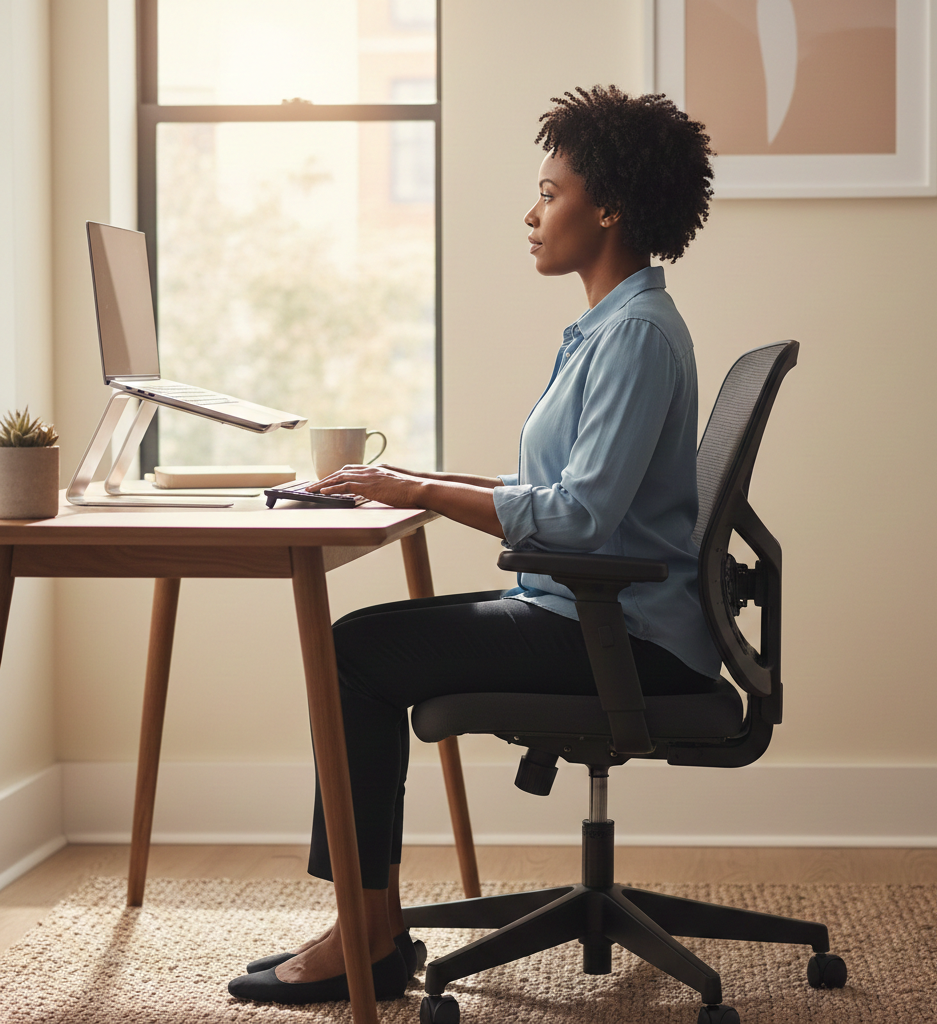
Starting with this is a huge step to getting things right. If you don't have an ergonomic chair, here's how to improve your workspace.

Raise your screen: Use a laptop or monitor riser to raise your screen. If you cannot afford one, you can stack books or use a box to bring your laptop to eye level.
Sit right: Keep your feet flat on the ground, use a pillow or folded towel for lower back support, and avoid long hours working from couches or beds.
Keyboard and Mouse: Keep them close to you, so you don't have to reach or lean forward before you can use them.
2. Movement and neck stretches

20-20-20 Rule: Every 20 minutes, look at something 20 feet away for 20 seconds. This is very good for your neck and eyes.
Take standing breaks: Stand or walk around when answering calls. You can also do that while a file is uploading.
A 2023 MDPI systematic review found that combining manual therapy with posture exercises (e.g., chin tucks a simple movement designed to improve posture and alleviate neck and upper back tension by aligning the head directly over the spine, and scapular retractions) significantly improves FHP, reduces pain, and boosts neck mobility.
3. Change your digital habits

Technology is advancing. Now you can use voice-to-text or send WhatsApp voice notes instead of typing for too long. Get an external keyboard and mouse if you use a laptop. It is much cheaper than paying for neck pain treatment. Also, monitor your posture and adjust it regularly. You can do this by checking yourself in a mirror or taking a picture of yourself.
4. Know when to seek professional help

This is very important. If the neck pain, numbness or weakness lasts longer than a week or you experience any unremitting symptoms, speak to a doctor or consult a physiotherapist. They will guide you on treatment and rehabilitation programs to aid your recovery. Don't wait till it is too late!!
The digital world is here; remote workers and freelancers are leading the way. But always remember that your wellbeing is your priority. Don't let tech neck reduce your productivity, confidence, or alter your appearance. By adopting these tips on posture alignment and taking breaks from your screens, you can stay healthy and pain-free.
Let tech help you, not break your neck.


Comments